The Order of Value
Why direct distribution is ownership, institutional co-signing is a transaction, and how the creators who compound learn to read the difference.
Essays on Strategy, Creativity and Management | Edition 07
Introduction
What does a creative leader actually own when an institution finally arrives?
Institutional recognition is often presented as the destination: the festival booking, gallery representation, publishing agreement, auction debut or brand collaboration that confirms the market has finally noticed. For the creator, it can certainly be meaningful. Economically, however, it is better understood as the beginning of a transaction.
The terms of that transaction are shaped long before the institution enters the room. They depend on whether the creator has already built an audience, reputation or body of work that creates demand independently, and whether the relationship with that audience remains sufficiently direct for the creator to carry bargaining power into the conversation.
That distinction matters because visibility and ownership are not the same thing. An institution can expand reach enormously while simultaneously changing who controls access, pricing, rights or future optionality.
The case I want to make is straightforward: direct distribution creates the asset, institutional engagement is a transaction priced against it. The creators who compound are those who understand the order in which the two are built.
I came to that conclusion partly through people I have known for most of my life.

1. From Soho House to Lowlands
Growing up, creativity, music and expression were not abstract categories to me, but ordinary languages spoken across the different environments I moved between. Over time, people I had known when that work was still informal began turning the same instinct into professional, and increasingly award-winning, careers.

One of them was a friend I had played with in a church band as a teenager, while our mothers sang in the same choir. In the autumn of 2022, we sat together at Soho House in Amsterdam. Earlier that year he had played Eurosonic Noorderslag, while NTR was following his development through NPO Soul & Jazz: New Generations. We spoke about the institutional attention beginning to form around the work and, as often happens in long friendships, the conversation moved naturally from the music itself to positioning, sequencing and the economics of the opportunities beginning to appear.
The Grachtenfestival followed in 2023 and North Sea Jazz in 2024. In 2025, he received an Edison, and later that summer performed at Lowlands. I had given my word that I would be there, so I flew in and joined him backstage during soundcheck.

What struck me was not the scale of the stage. It was who had gathered before the audience arrived.
Bookers, representatives and people connected to institutions outside the Netherlands were already there, watching a musician whose work had spent years developing before many of those organisations had any reason to pay attention.
That was when the economic pattern became clearer to me. The institution had not created the audience, the work or the cultural credibility it was now interested in. Those things had been accumulated earlier, through performances, relationships and rooms in which the work was being tested without the machinery of an industry surrounding it.
The institution was arriving on top of value that already existed.
That is what creates bargaining power. Not recognition itself, but the ability to arrive at the moment of recognition with something the other party needs access to.
2. The Audience Is the Asset
The same architecture is visible in a different form in the career of Olaolu Akeredolu-Ale, the Nigerian-born artist known as Slawn.
By the time Sotheby's brought his work to auction in Contemporary Curated in 2022, with his friend and collaborator Skepta involved as curator, Slawn had already built a public around the work on his own terms. His rise travelled through social media, physical events, collaborations and the spectacle surrounding his practice long before the traditional art establishment became central to the story.

Nigeria Calling: The Rise and Rise of Instagram Art Sensation Slawn, published by Sotheby's, describes how his auction debut followed an audience that already stretched across art, fashion, music and sport. Sotheby's itself characterises his rise through his ability to command attention and maintain control over the desirability of his output.
His auction debut made the transfer between those worlds visible. Bobo n Jarrad Go To Church carried an estimate of £5,000 to £7,000 and ultimately sold for £27,720.

The interesting point is not simply that the work exceeded its estimate. It is the sequence. Sotheby's did not manufacture Slawn's cultural relevance and then present it to the market. The institution encountered an artist whose relevance had already been established elsewhere and created a new market mechanism through which that relevance could be priced.
That distinction extends beyond art. How Direct-to-Consumer Brands Can Continue to Grow, published by Harvard Business Review, argues that the durable advantage of direct-to-consumer businesses lies not merely in eliminating an intermediary, but in building and deepening a direct relationship with customers over time. The channel matters because of the relationship it makes possible.
For a creator, the equivalent is the ability to reach an audience without every interaction being mediated by the institution that eventually wants access to it.
That relationship is more than a communications channel. It is part of the creator’s economic position.
3. What Institutions Actually Buy
Understanding that position does not require treating institutions as adversaries. Quite the opposite. Galleries, labels, publishers, auction houses, festivals and brands can provide capital, infrastructure, distribution, legitimacy and forms of access that would be difficult or inefficient for a creator to replicate independently.
The more useful question is what each side contributes to the exchange.
Institutions are businesses with their own economics. They have employees, investors, financing requirements, reputational considerations and commercial objectives. Cultural importance does not remove those realities.
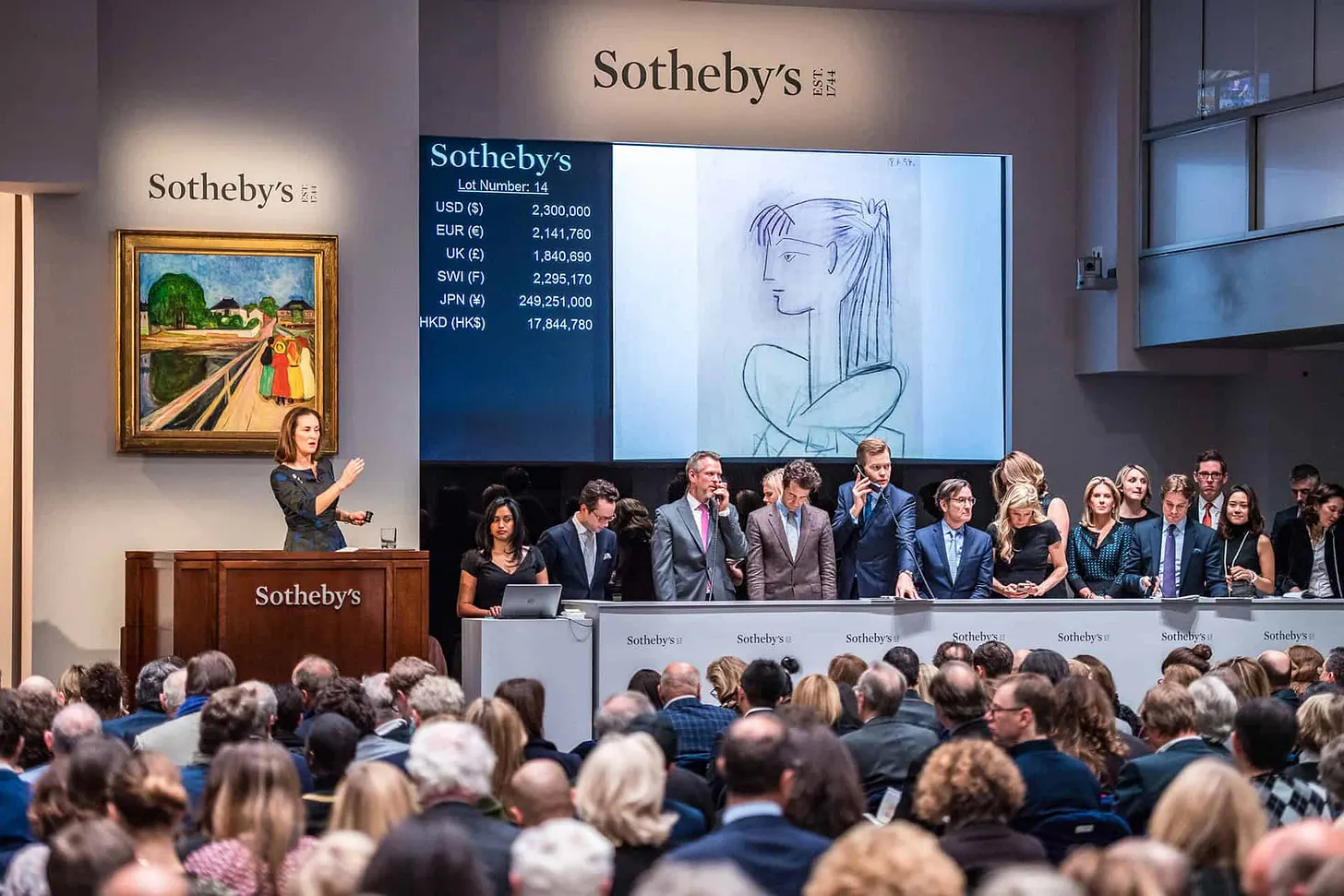
Sotheby's provides an unusually visible example. In 2026, the company issued $825 million of 8.25 per cent senior secured notes due in 2031. The proceeds were used, among other purposes, to refinance in full $765 million of 7.375 per cent senior secured notes due in 2027.
Ropes & Gray Advises Sotheby's on $825 Million Senior Secured Notes Offering and Revolving Credit Facility Upsize, published by Ropes & Gray, confirms the size, coupon, maturity and use of proceeds.
The point is not that this makes Sotheby's unusual or financially fragile. It demonstrates something far more ordinary and therefore more useful: even an institution with centuries of history actively manages capital, liquidity and its commercial position.
Creators should read institutional relationships with the same seriousness.
An institution may bring distribution, expertise, price discovery, access to buyers or a degree of legitimacy that accelerates the creator's trajectory. The creator brings work, cultural relevance, an audience and the possibility of economic activity that would not exist without that work.
The strongest relationship therefore begins when both parties understand that there is an exchange taking place.
Boardroom Reframe
The Usual view: An institutional offer is judged by the name, reach and recognition attached to it.
The Management view: Recognition is only one side of the exchange. The economics sit in the access, rights, exclusivity and optionality being traded, and in whether the creator retains control of the audience relationship that created the bargaining position.
The Boardroom question: What are we gaining, what are we surrendering, and does the deal strengthen or weaken the asset that made us attractive in the first place?
Visibility can increase while bargaining power declines.
4. Reading the Exchange
Once the relationship is understood as a transaction, the management questions become more precise.
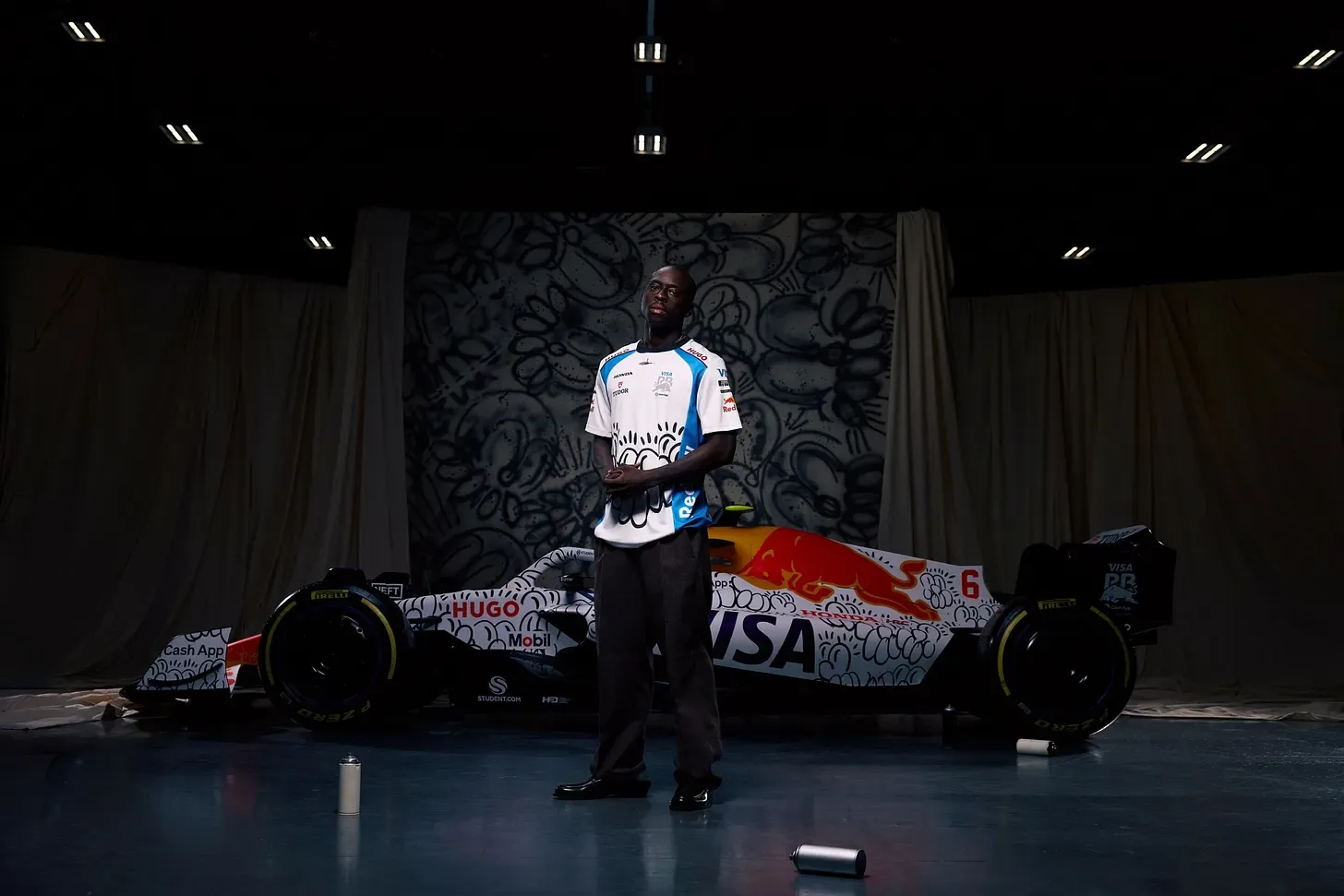
A collaboration with a major institution may be valuable even when the institution captures substantial economics. A period of exclusivity may make sense if the counterparty is providing access that would otherwise take years to build. Distribution rights may be worth exchanging when the distributor can place the work into markets the creator cannot efficiently reach independently.
The problem is not giving something away. Transactions exist because both parties exchange value. The problem is surrendering value without identifying what is being surrendered.
That is particularly relevant in creative industries because many commercial terms affect future options rather than only the economics of the immediate deal. Exclusivity can constrain a later partnership. Distribution rights can change access to the audience. A pricing agreement can establish expectations that become difficult to reset. Intellectual-property terms can determine who participates economically if the work develops beyond its original form.

This is why the headline fee alone rarely tells management whether an agreement is attractive. Commercial collaborations in fashion make the point clearly. Elegantly Connecting Fashion and Art, published by The Business of Fashion, describes how brands and galleries use these relationships deliberately: the brand gains cultural relevance and creative distinction, while the artist gains exposure, capital and access to an audience beyond the art world.
That value runs in both directions. The brand acquires cultural relevance and creative distinction; the artist may receive capital, visibility, distribution or access to an entirely new public.
The management question is whether the creator understands the price of what is being exchanged on both sides.
5. The Order That Compounds
For me, the practical lesson resolves into three related disciplines.
The first is sequence. Which asset should exist before the next agreement is signed? An audience built first creates a different conversation from an audience borrowed entirely from the institution. A proven body of work creates a different pricing discussion from a promising idea. Each step changes the bargaining position from which the next step begins.
The second is financial discipline. Rights, exclusivity, pricing restrictions and access all have value even when they do not appear as a separate number in the contract. Management has to compare what is being given with what is being received and consider not only immediate cash, but also liquidity, reach, market access and future optionality.
The third is decision discipline. Opportunity can become difficult to evaluate precisely because institutional recognition carries emotional weight. A clear management rhythm helps separate the significance of the name attached to an offer from the economics and strategic consequences of the offer itself.

At MUNDUS CRAS, this is where strategic finance, transactions and management converge. The objective is not to teach creative businesses to distrust institutions. It is to help leadership understand the asset it is bringing into the transaction and the implications of the rights it is exchanging.
The order matters because bargaining power is rarely created at the negotiating table itself. It is built through the choices that determine what the creator owns before negotiation begins.
An audience that can be reached directly is one such asset. Intellectual property is another. A distinctive body of work, a credible operating platform or the financial ability to walk away can all change the economics of the same offer.
Recognition may open the door. Optionality determines how freely the creator can walk through it.
Conclusion
What a creative leader owns when an institution arrives is not the prestige or validation attached to the institution's name. Those may be valuable outcomes, but they are not the underlying asset.
The asset is what existed before the institution became necessary: the work, the reputation, the intellectual property and, increasingly, the relationship with the public that gives the creator an independent route to demand. Institutional engagement can multiply that value dramatically. It can also change who captures it. That is why the relevant question is not whether an artist, founder or creative business should remain independent. Independence is not inherently superior to partnership, and distribution is not inherently superior when it is direct.
The question is whether each agreement leaves the creator with a stronger or weaker economic position than the one that made the institution interested in the first place.
The creators who compound understand that order. They build assets before recognition, read recognition as an exchange rather than a favour and enter partnerships knowing which rights are worth sharing because they also know which ones they intend to keep.
Summary Takeaway
If you remember one thing from this essay, let it be this : direct distribution creates bargaining power because it preserves a relationship with the public that exists independently of the institution. Institutional recognition can then multiply that value, provided the transaction does not surrender the asset that created the leverage in the first place.