The Identity Paradox
What a Dutch brewery can teach every founder about the difference between a product and the value it carries.
Essays on Strategy, Creativity and Management | Edition 06
Introduction
What separates the family businesses that endure from the ones that quietly disappear?
Leadership Lessons from Great Family Businesses, published by Harvard Business Review, cites the Family Business Institute in reporting that 30 per cent of family businesses last into the second generation, 12 per cent remain viable into the third and only 3 per cent continue into the fourth generation or beyond. Those figures do not tell us why individual businesses disappear, but they illustrate how difficult it is for ownership, leadership and the logic of an enterprise to remain coherent across repeated transitions.
Heineken belongs to the relatively small group that has remained family-controlled across generations. Its history is usually told through beer, marketing and international expansion, but there is another way to read it: as a story about the relationship between identity and control.
The lesson is not that strong brands simply protect their heritage. It is that identity becomes durable only when somebody retains the authority to decide what may change and what may not.
I began thinking about that distinction on an October morning in Amsterdam, at six o'clock, inside Hotel De L'Europe.
1. Six in the Morning on the Amstel
I am a born Amsterdammer. The city is familiar to me in the way only a home city can be: not as a postcard, but as a sequence of streets, buildings and associations accumulated over a lifetime. I had passed Hotel De L'Europe, where the Amstel meets the Rokin, more times than I could count. I knew the façade. I had simply never looked beyond it.
During my years at Deloitte, I was fortunate to work on an engagement involving Heineken's real estate portfolio. In the autumn of 2021, that work took me through De L'Europe at six in the morning, before the building had properly awakened.
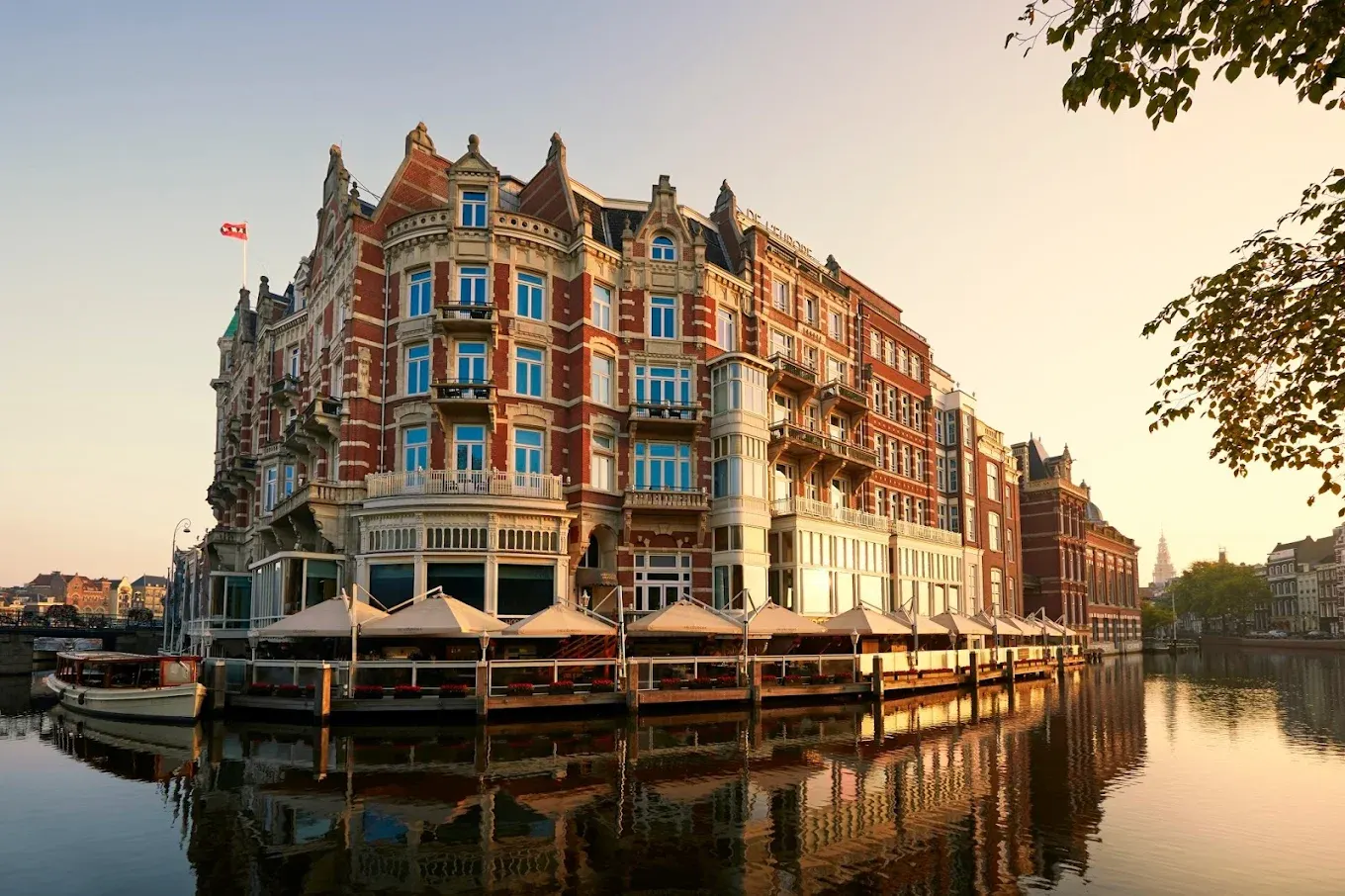
Our Story, published by De L'Europe Amsterdam, traces the site back to an inn opened in 1638, with the present hotel opening in 1896. It also records Freddy Heineken's relationship with the hotel and his eventual acquisition of it. Over time, the address became more than a conventional hospitality investment. It became a place through which the family expressed identity, hospitality and continuity.
Part of my work required a vacancy inspection: an unannounced, room-by-room verification of which spaces were occupied and which were not, so that the reported position could be relied upon. It required access before the normal rhythm of the hotel had begun, which meant seeing the building without any preparation for an external audience.
What I found was a hotel that was entirely itself. The function spaces were composed, the service corridors unhurried and the rooms held their character as though the absence of guests changed nothing essential. At the end of the inspection, I also saw the private cellar associated with Mr. Heineken, a space that made the relationship between family, institution and place unusually tangible.
What remained with me was not simply the grandeur. It was the consistency. Establishments of this kind do not sustain a standard through aesthetics alone. That standard becomes embedded through decisions repeated over long periods, until people carry it without needing to be reminded each morning what the organisation is supposed to represent.
I left thinking about what it takes to build something that still knows what it is when nobody is watching.
2. The Family Business That Almost Wasn't
Alfred "Freddy" Heineken entered the family company during the Second World War. By then, however, the relationship between the family name and family control had already changed.
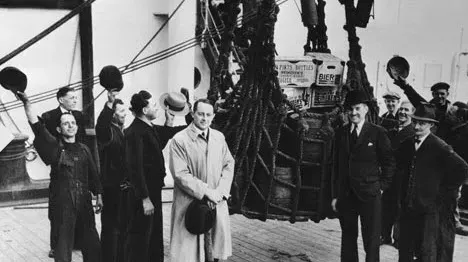
A Masterful Portrait, published by the Heineken Collection Foundation, records that the family had lost its majority position through the company's flotation in 1939. The name remained on the brewery, but the family no longer possessed the same authority behind it.
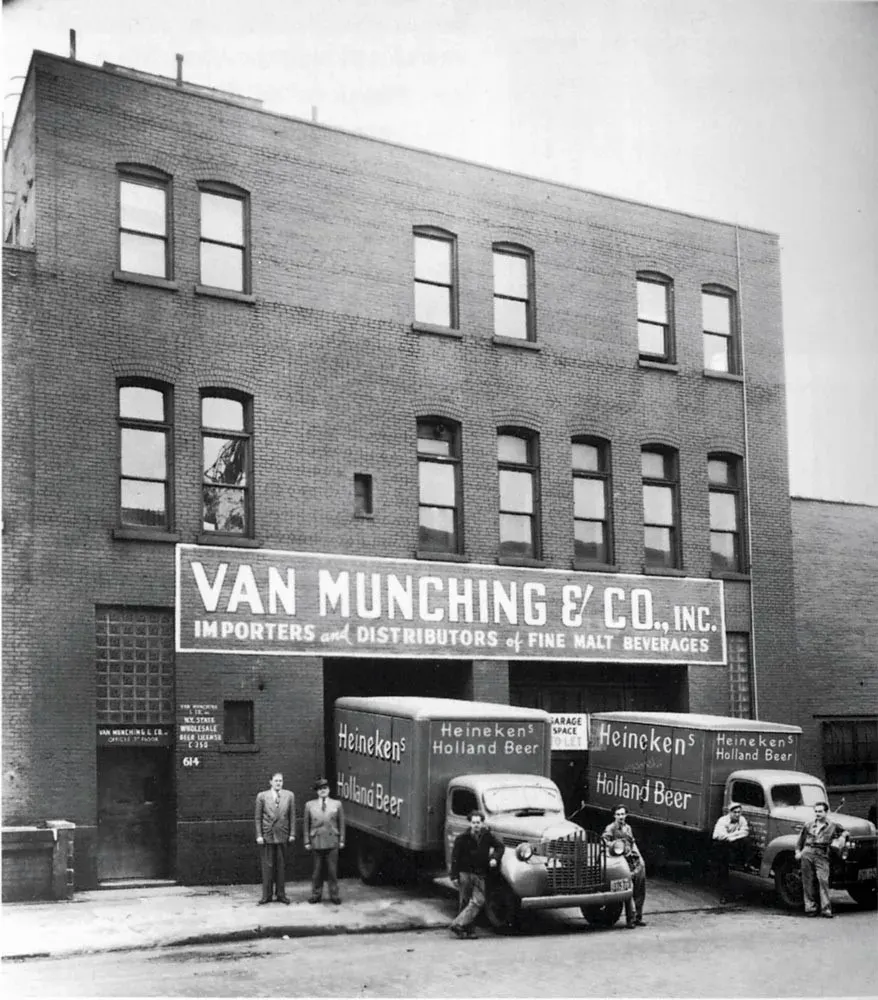
After the war, Freddy Heineken spent time in the United States working with Leo van Munching, Heineken's American importer. The experience became formative. Van Munching had built Heineken into the leading imported beer by emphasising its exclusive and international character, teaching Freddy Heineken that the economic value of a product could exceed the physical characteristics of the product itself.
That lesson reinforced something Freddy Heineken had already encountered as a teenager. He later recalled a school visit to Philips where the distinction was explained in simple terms: Philips was not really selling light bulbs; it was selling light. The product was the mechanism through which a larger value was delivered.
For Heineken, beer would increasingly work the same way.
After returning to Amsterdam in 1948, Freddy Heineken still had to establish his position within a company whose leadership did not intend to hand him authority simply because of his surname. His subsequent period at the Nederlandsche Handel-Maatschappij exposed him to credit, corporate finance and the mechanics through which capital structures determine control.
It is difficult to miss the significance of that sequence. America taught him what the name could mean. Finance taught him how ownership determines who gets to decide what happens to that meaning.
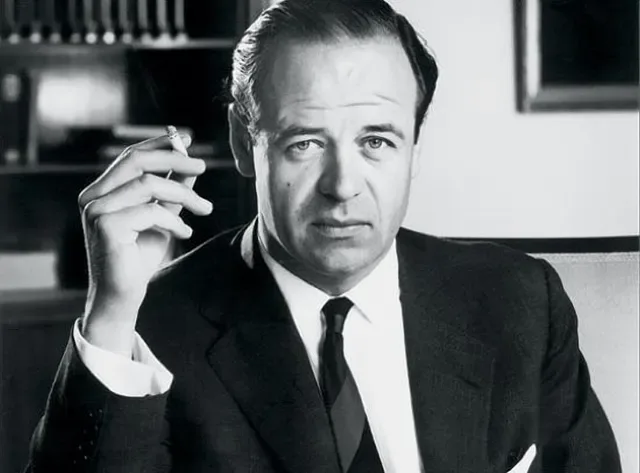
By 1951 he had joined Heineken's Supervisory Board. Three years later, the family had regained a majority interest.
3. Identity as a Financial Decision
The recapture of family control and the reshaping of the brand are often treated as separate parts of Freddy Heineken's career. I think they are more interesting when read together.
Heineken Holding N.V. had been established in 1952. Our Company, published by Heineken Holding N.V., still describes the purpose of that structure as promoting the continuity, independence and stability of the group. Today, Heineken Holding owns 50.005 per cent of Heineken N.V., preserving a structure explicitly designed around long-term control.
That is not simply financial engineering. Capital structure determines who retains the authority to define the future of the enterprise.
Around the same period, Freddy Heineken was also reshaping how the Heineken name appeared to the market. Freddy Heineken, published by Stadsarchief Amsterdam, records that the green label was his idea and that it was introduced into the Dutch market in 1954. Freddy Heineken also decided that the black bar should carry only the Heineken name rather than individual beer styles, while the typography evolved into the recognisable "smiling e".
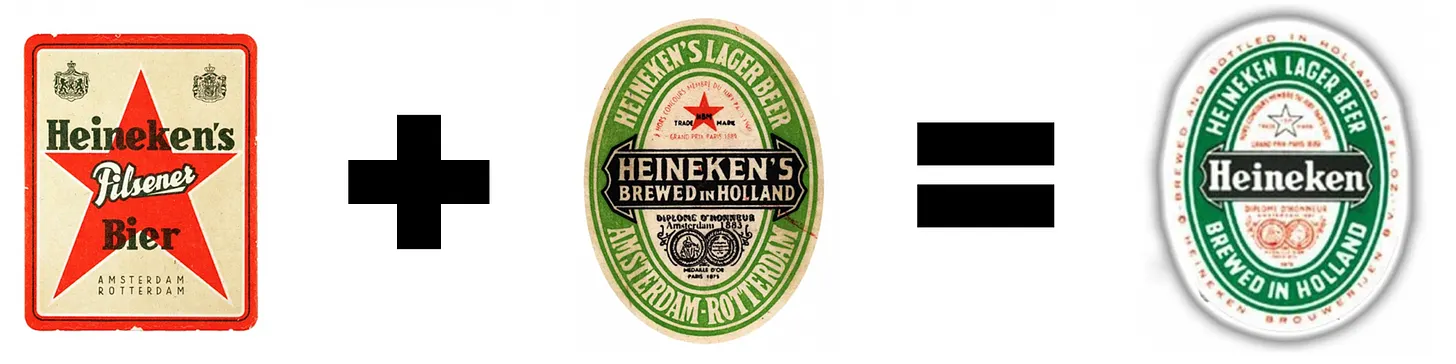
One decision concerned ownership and the other concerned visual identity, but they expressed a similar instinct. Freddy Heineken was deciding what the name was worth, and then creating both the financial and symbolic architecture through which that meaning could be protected.
That distinction matters because founders often discuss identity as though it sits exclusively with brand, culture or communications. It does not. Identity becomes a governance question as soon as ownership changes. If new capital enters, who obtains the right to redefine the business? If a founder steps back, where does the authority to protect the standard move? If a family loses voting control, does it still possess the practical ability to prevent the organisation from becoming something fundamentally different?
These are financial questions because ownership determines control rights.
Boardroom Reframe
The usual view: Identity is a brand question, expressed through positioning, design and communication.
The management view: Identity is also a question of control rights: who is legally and practically entitled to decide. Ownership and governance determine who holds the authority to redefine what the business is allowed to become when capital, succession or growth changes the balance of power.
The boardroom question: Which elements of the business must remain protected, and does the ownership structure preserve the authority to protect them?
Freddy Heineken did not protect a label. He protected the right to decide what the label meant.
4. When Growth Tests Identity
The difficulty becomes more visible as a business grows.
A founder-led organisation can carry ambiguity about its identity for years because the founder personally fills the gaps. The founder knows which opportunity belongs, which collaboration feels wrong, where a compromise is commercially sensible and where the same compromise would weaken the business.
That arrangement can function surprisingly well while the organisation remains close to its founder. Scale changes the economics of ambiguity. More people begin making decisions, new investors may enter, leadership becomes distributed and commercial pressure introduces opportunities that are attractive precisely because they sit close to the boundary of what the business historically considered itself to be.
At that point, identity must become more than instinct. Founder's Mentality, published by Bain & Company, links sustained profitable growth to three characteristics commonly associated with successful founders: an insurgent mission, frontline obsession and an owner's mindset. Bain's broader argument is that growth itself creates complexity, and that businesses often lose the qualities that originally made them distinctive as that complexity increases.
The management implication is not that everything associated with the founder should be preserved. Some practices belong to a particular stage and should disappear as the organisation matures. The more difficult task is identifying what is structural and what is merely situational.
A founder approving every invoice is situational. A specific creative standard may be structural. An informal weekly conversation may be situational. A principle about which customers the business refuses to exploit may be structural.
Confusing the two creates problems in both directions. Preserve too much and heritage becomes inertia. Change too much and growth gradually consumes the distinction that customers, employees or investors valued in the first place.
5. From Brand Equity to Control
Modern research reinforces the economic importance of that distinction.
Marketing in the AI era: To matter more or cost less?, published by PwC with the Association of National Advertisers, draws on financial and marketing data from public companies and reports that organisations performing strongly across marketing execution, brand strength and profitability generated 79 per cent higher total shareholder returns than weaker peers over the period studied.
The useful lesson is not that brand alone produces shareholder value. PwC's finding is explicitly about the interaction between execution, brand and economics. That is precisely why the relationship between identity and management matters.
A distinctive business needs more than a recognisable image. It needs the financial capacity to invest in that image, the governance to protect it, the operational discipline to deliver what the image promises and an ownership structure that determines who may redefine it when circumstances change.

At MUNDUS CRAS, this is where questions of strategic finance, governance and ownership begin to converge. The objective is not to preserve an organisation in amber. It is to make explicit what the business is unwilling to lose before a transaction, new investment or change in ownership makes that question materially more expensive.
That work has to happen before the term sheet, succession event or growth decision forces the answer.
Conclusion
Standing in Mr. Heineken's cellar that morning, I was not thinking primarily about wine, real estate or asset values. I was thinking about the distance between one generation's decisions and the standard still visible in the building decades later.
The hotel did not feel consistent because somebody had prepared it for my arrival. It felt consistent because the institution already knew what standard it was supposed to carry.
The same principle applies to businesses undergoing growth or transition. The market will change. Capital requirements will change. Leadership will change. Products may need to change as well. Enduring organisations are not those that refuse those changes, but those that understand which changes are compatible with what they are trying to preserve.
Mr. Heineken's story makes that distinction unusually visible. His contribution was not simply that he understood marketing, nor simply that he recovered family control. He understood that meaning without control can eventually be redefined by somebody else, while control without a clear understanding of what is being protected has little strategic purpose.
Identity, therefore, is not merely a brand decision. It becomes a financial and governance decision the moment ownership determines who has the right to change it.
Summary Takeaway
If you remember one thing from this essay, let it be this : identity becomes durable when the organisation knows what must remain protected and retains the authority to protect it. Brand expresses that identity; ownership and governance determine who gets to redefine it.